
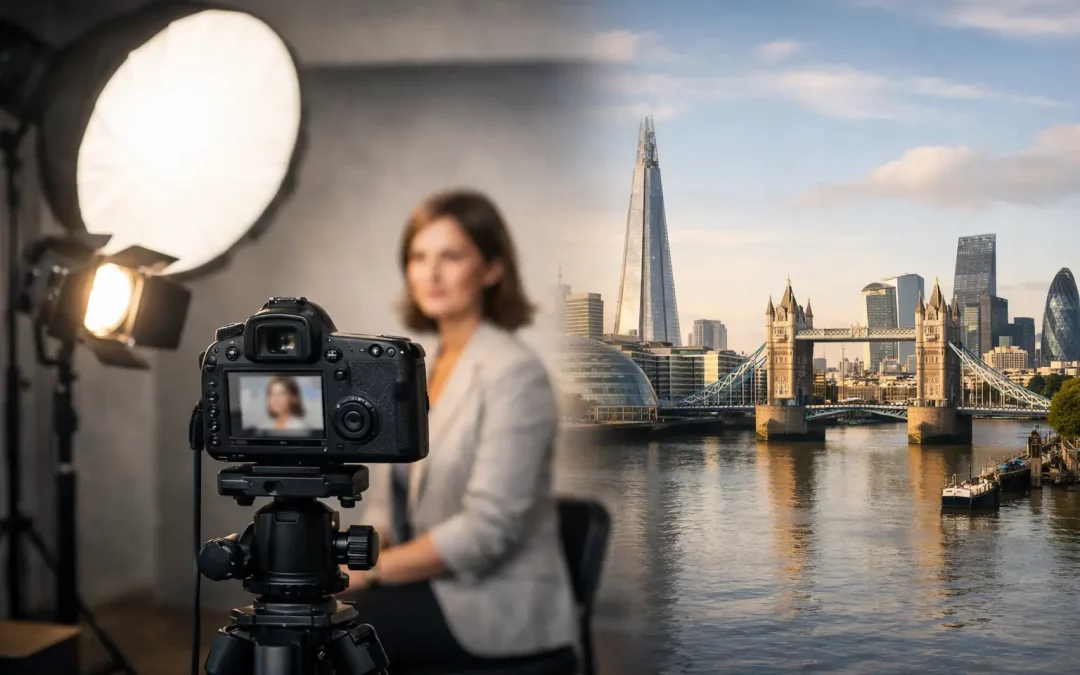
A strong headshot rarely begins with a camera setting. It begins with light that feels right for the person in front of it. This professional headshot lighting guide explains why lighting has such a powerful effect on your portrait, whether you need a polished business profile photograph, a natural-looking personal brand image or a casting-ready actor’s headshot.
The aim is not to make you look like somebody else. Good portrait lighting brings clarity to your expression, gives your features shape and helps you look rested, approachable and confident. When it is handled well, most people simply notice that the image feels like them on a very good day.
Why lighting matters in a professional headshot
Light decides where the viewer looks first. It can draw attention to your eyes, soften the appearance of shadows and create separation between you and the background. It also sets a mood. Bright, clean light often suits a professional LinkedIn portrait or corporate team headshot, while more directional lighting can add character for an actor or a creative professional.
There is no single flattering setup for every face. A person with strong cheekbones may suit a little more shape and contrast, while someone who wants a softer, more open feel may prefer broad, even illumination. Your hairstyle, glasses, skin tone, clothing and the purpose of the image all play a part.
This is why professional lighting is more than placing a lamp in front of a backdrop. It is an active process of observing how light falls on your face and making small adjustments until the result feels natural and refined.
The most flattering starting point: soft, directional light
For many business portraits, soft directional light is the most dependable choice. A large light source placed slightly above eye level and just to one side of the camera creates gentle definition without making the image feel severe. It gives the face dimension, while keeping the eyes bright and visible.
Large light sources are flattering because their light wraps gradually around the face. A small, bare light can create hard-edged shadows, shine on the skin and emphasise texture. That can be a deliberate creative choice, but it is not usually what someone wants from a versatile professional headshot.
Direction still matters. Completely flat lighting, where the light comes directly from the camera’s position, can minimise shadows but can also make a portrait look two-dimensional. Moving the key light a little to the side brings back shape. The right amount depends on the result you need: calm and open for a business portrait, or a little more drama for an editorial or actor’s image.
The importance of catchlights
Catchlights are the small reflections of the light source in the eyes. They may seem like a tiny detail, yet they bring life and connection to a headshot. Without them, even a beautifully lit image can feel flat or distant.
A photographer will normally position the light so these reflections sit naturally in the upper part of the eyes. You do not need to think about this during a session, but it explains why being asked to turn your chin by a fraction or lift it slightly can make such a difference.
Studio light or daylight: which is best?
Both can produce excellent headshots. The better choice depends on your intended use, the look you are drawn to and the practical conditions on the day.
Studio lighting offers consistency. The photographer can precisely control brightness, direction and background, which is particularly helpful when photographing a whole team or creating a series of images that need to match. It is also unaffected by a grey London morning or an early winter sunset. For corporate portraits, this reliability is a real advantage.
Daylight often feels relaxed and organic. Window light can be wonderfully soft, especially when it is indirect, and it can work beautifully for personal branding portraits or lifestyle-focused photography. The trade-off is that natural light changes quickly. Sun, cloud cover and the time of day can alter the look from one minute to the next, so it requires careful management.
Often, the most polished result comes from a considered combination. Daylight may shape the image while subtle studio lighting adds brightness to the eyes or separates the subject from the background. The equipment itself matters less than whether the light feels believable and suits the person being photographed.
Professional headshot lighting guide: matching light to purpose
A business headshot should generally communicate trust and ease. The lighting is usually clean, soft and balanced, with enough definition to avoid a bland result. If your role is client-facing, a warm expression and open lighting can help you appear immediately approachable. Senior leaders may prefer slightly more sculpting, provided the portrait remains welcoming rather than intimidating.
For entrepreneurs and consultants, the setting can influence the lighting choice. A studio portrait offers focus and polish. An environmental portrait in an office, workspace or London location can bring more context, but the photographer still needs to ensure that the face is brighter and more compelling than the surroundings.
Actor’s headshots need a different kind of discipline. Casting professionals need to see you clearly, so elaborate shadow patterns, overly dramatic colour and heavy retouching can get in the way. The best lighting reveals your eyes, skin tone and character honestly. It should support the role of the image, not become the story itself.
Creative professionals can have more freedom. A darker background, sharper side light or a more cinematic finish may fit your personal brand. Even then, clarity matters. If the lighting is so stylised that people cannot quickly recognise you, it may be less useful across professional platforms.
Background, clothing and lighting work together
Lighting does not exist separately from the rest of the frame. A pale background reflects light and contributes to an airy, contemporary look. A darker background can feel sophisticated and can make your face stand forward, especially when there is a subtle light separating your shoulders from the backdrop.
Clothing also changes the balance. A white shirt or very pale top can bounce light upwards towards the chin, which is often flattering but occasionally needs control. Dark clothing can create a crisp outline but may lose detail against a dark background. Mid-tones, rich blues, greens and warm neutrals often photograph beautifully, though the best choice is one that feels like you.
Avoid selecting an outfit solely because it is fashionable or because you think it will be ‘safe’ on camera. If you feel unlike yourself, that discomfort often shows first in your posture and expression. Bring a couple of options if possible, and let the overall look guide the final choice.
How to prepare for your headshot session
You do not need to arrive knowing your best angle or how to pose. That is part of the photographer’s job. A few simple preparations can make the experience more comfortable and give the lighting its best chance to work for you.
Get a good night’s sleep where you can, drink water and allow enough time to arrive without rushing. If you wear glasses, clean them carefully before the session. Reflections can usually be managed through light placement and a slight change of angle, but clean lenses always help.
Make-up should look like a polished version of your usual self. Matte products can reduce unwanted shine, while heavy foundation or overly reflective skincare may look less natural under studio lights. For men and anyone who prefers a more minimal finish, a little powder can be useful without looking made up.
Most importantly, do not practise a fixed smile in the mirror until it feels unfamiliar. A good photographer will guide you into small movements, keep the conversation flowing and photograph the moments when your expression is genuinely engaged. Relaxation is one of the most flattering things you can bring to a headshot.
What happens during a well-directed session
The first few frames are often about finding the right light rather than making the final photograph. A professional photographer may raise or lower the light, adjust its angle, change the background, or ask you to rotate your shoulders slightly. These adjustments are precise, but they should never feel fussy or uncomfortable.
As the lighting settles, attention shifts to expression and posture. A very slight lean towards the camera can create presence. Dropping the shoulders helps the neck look longer and the overall pose feel easier. Looking just above the lens, directly into it, or slightly to one side each creates a different energy.
At Henrietta Photography, that direction is designed to feel calm and personable, especially for clients who say they dislike having their photograph taken. The goal is a considered portrait that still feels effortless when you see it.
A headshot should work hard long after the session is over. It may appear on a website, a company bio, a speaker profile, a casting platform or a social profile, often before you have had the chance to introduce yourself. Choose lighting that lets people see you clearly, then allow your expression to do the memorable part.