
A casting director may look at your Spotlight profile for only a few seconds before deciding whether to click through. That is why this Spotlight headshot requirements guide is not simply about looking polished. Your image needs to make you recognisable, castable and easy to imagine in the room.
The strongest Spotlight headshot is a truthful, professionally made photograph that feels like you on a very good day. It should give casting teams confidence that the person they call in will look like the person in the image. A beautiful portrait is valuable, but for an actor, accuracy comes first.
What a Spotlight Headshot Needs to Do
Your headshot is not a fashion campaign, a heavily styled editorial portrait or a social media selfie. It is a working tool. Casting teams use it alongside your playing age, credits, showreel and skills to decide whether you might be right for a role.
A successful image shows your face clearly, with your eyes visible and engaged. It should communicate something of your natural energy without forcing a character or expression. Calm, open and present usually reads better than overly smiley, intensely serious or deliberately enigmatic.
The question to ask is simple: if someone met you at a casting tomorrow, would they recognise you immediately? If the answer is not an easy yes, your image is probably no longer serving you.
Spotlight Headshot Requirements Guide: The Essentials
Spotlight’s profile guidance can change, so always check the current upload rules on your own account before preparing final files. However, the photographic principles behind a strong casting headshot remain consistent.
Your main image should be current. If you have changed your hair colour, length or texture, grown or removed facial hair, changed your glasses, or your appearance has otherwise shifted noticeably, it is time to update it. A headshot from several years ago can still be technically lovely, but it creates the wrong expectation if it no longer represents you.
It should also feature you alone. Group shots, cropped images where another person’s shoulder remains visible, and photographs in which your face is tiny are not useful to a casting professional. The focus belongs firmly on your face.
Choose a clean, uncluttered setting and clothing that supports rather than competes with you. A simple background is often the most effective because it keeps attention on your expression and features. Equally, a plain top in a flattering colour can work beautifully, while busy patterns, prominent logos and distracting jewellery can date an image or pull the eye away from your face.
Retouching should be subtle. Temporary blemishes, a stray hair or a little under-eye shadow may be softened with a light hand, but your skin texture, freckles, lines and defining features should still look like your own. Casting is based on real people. An over-smoothed image may look impressive at first glance, yet it can feel less credible and make a meeting more difficult.
Framing That Lets Casting See You
A head-and-shoulders composition is the classic choice for good reason. It gives sufficient detail for casting to read your face while retaining a sense of posture and personality. Usually, the camera should be close enough for your eyes to be clear without becoming uncomfortably tight.
Looking towards the camera is generally the most useful option for a primary Spotlight image. Direct eye contact creates connection and helps your profile feel immediate. There are occasions when a slightly off-camera image has a particular quality, but it is often better as a supporting photograph than the first image a casting director sees.
Natural light can be lovely, and studio lighting can be equally flattering. The deciding factor is not the style of light but whether it is controlled and truthful. Heavy shadows that hide part of your face, strong coloured lighting, dramatic filters and very high-contrast treatment can make an image feel more like a concept than a casting photograph.
Black and white images can be striking, but colour is often the safer choice for a main headshot. It gives casting more immediate information about your complexion, hair and overall appearance. If monochrome suits your work and genuinely reflects your look, it can still have a place in your selection.
Expression: Present, Not Performed
Many actors arrive for a session worried about finding the one perfect expression. In practice, a useful set of headshots has range. You may need warmth, authority, vulnerability, wit or quiet intensity depending on the work you pursue. But none of these qualities should look manufactured.
Trying to signal every possible casting type in one frame usually produces a strained result. Instead, think about being available to the camera. Let your face settle. Give yourself a moment between frames. A skilled photographer will guide you through small adjustments in posture, gaze and energy, then recognise the instant when the photograph feels believable.
A small smile is often excellent, particularly if warmth is naturally part of your presence. You do not need to smile in every picture, though, and a neutral expression need not be flat. The best choice depends on your natural casting and the roles you are seeking. A commercial performer may lead with openness; an actor whose work sits in drama may need an image with more stillness. Both must remain recognisably you.
Clothing, Hair and Make-up
Bring options rather than arriving in one outfit and hoping it works. Aim for clothes that fit well, feel comfortable and sit in colours that complement your skin tone. Mid-tones and rich, uncomplicated colours often photograph well. Very bright white can dominate the frame, while solid black can sometimes lose detail, though either may work under the right lighting.
Keep hair as you would realistically wear it for an audition. If you wear glasses regularly and they are part of how you are seen day to day, include them in at least some of your images. If you move easily between glasses and no glasses, it can be useful to photograph both looks, as long as each is current.
Make-up should enhance rather than alter. A polished natural finish helps skin look even under professional lighting, but a look that changes your features is not helpful. The same principle applies to grooming: a neat beard is absolutely fine if it is your everyday look; freshly grown facial hair for the shoot is likely to confuse the message.
Why Professional Photography Makes a Difference
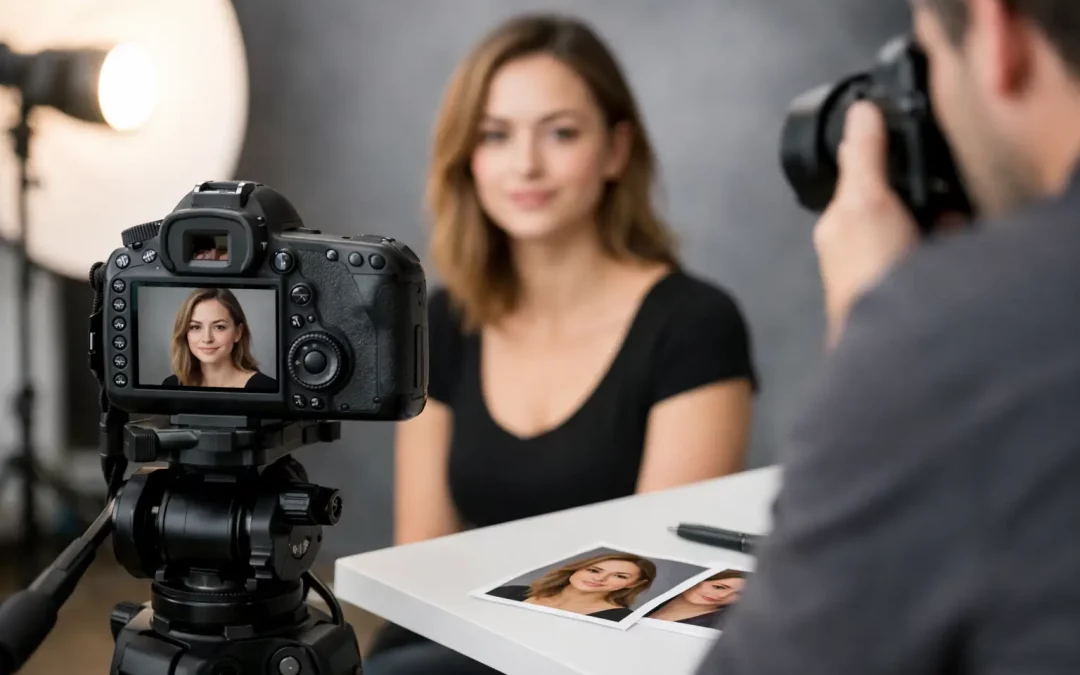
A phone camera can produce a sharp image, but sharpness alone is not the standard. Casting headshots require thoughtful light, considered composition and a photographer who understands the difference between a flattering portrait and an effective actor’s image.
Just as importantly, a professional session gives you time. Time to settle, experiment with clothes and find expressions that feel natural. Rushing through a few photographs against a wall often leaves actors with an image that is technically acceptable but gives little sense of them.
At Henrietta Photography, actor headshot sessions are designed to feel relaxed and focused, with clear guidance throughout. The goal is never to create a version of you that does not exist. It is to make sure the version casting sees is confident, current and compelling.
Choosing Your Final Images
Do not select your favourites solely because you look conventionally attractive in them. A headshot can be flattering and still fail to capture your presence. Compare your shortlist with a recent candid image or ask a trusted agent, acting coach or colleague which one feels most like you.
It is sensible to keep more than one strong image available, particularly if you have a broad playing range. Your primary photo should be the clearest and most representative. Supporting images can show a different expression, styling option or energy, but they should not suggest different people.
Before uploading, view the image at a small size. This is how many casting professionals will first encounter it. Can you still see your eyes? Does your face remain clear? Does anything distracting jump out before you do? If so, choose another frame.
Your Spotlight headshot does not have to shout. It simply needs to make casting pause, look again and feel confident about inviting the real you into the room.