
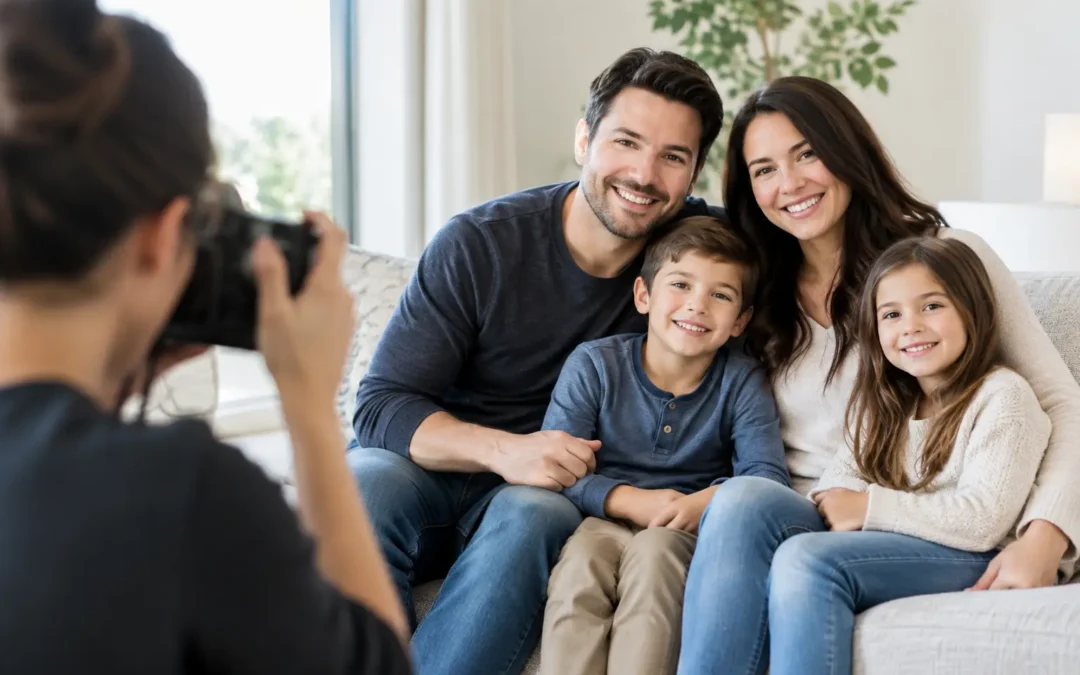
A brilliant family portrait is rarely the one where every person is looking straight at the camera with a perfectly timed smile. It is the image that brings you back to a feeling: your child’s hand in yours, a shared joke, the particular way your family fits together at this moment. That is what makes good family portraits – not perfection, but a truthful, beautifully observed version of family life.
For many parents, arranging a portrait session can feel like one more thing to organise. Will the children cooperate? What should everyone wear? Will the photographs feel formal or forced? With thoughtful preparation and calm, experienced direction, the session should feel far more enjoyable than daunting. The best results come when everyone is given room to be themselves.
Connection matters more than matching smiles
A family photograph has a job that a casual phone snapshot does not. It should show individual personalities while also capturing the relationship between everyone in the frame. A quiet cuddle with a toddler, siblings leaning into each other, or parents watching their children play often says more than a row of identical expressions.
This does not mean there is no place for a classic image where everyone looks at the camera. Those portraits are often the ones grandparents love and the ones that work beautifully framed at home. But they are strongest when they sit alongside more natural moments. A varied gallery tells a fuller story: polished enough to display, warm enough to feel personal.
Children do not need to perform for the camera. They need to feel safe, seen and allowed to move. A skilled family photographer will create small moments of connection rather than repeatedly asking for a smile. That might mean inviting a child to whisper something silly, walk between their parents, or simply have a proper cuddle. The resulting expression is usually much more genuine.
What makes good family portraits in practice
The photographs may look effortless, but good family portraiture relies on several considered choices. Light, location, pacing and direction all shape how a session feels and how the final images look.
Light that flatters rather than distracts
Soft natural light is often ideal for family portraits because it is gentle on skin and keeps attention on faces. Overcast London weather can be surprisingly lovely for this, giving an even, flattering quality without harsh shadows. At other times, a bright window indoors or open shade outside can produce the same calm effect.
A sunny day is not automatically better. Direct midday sunshine can lead to squinting, strong contrast and children who are quickly too warm. If an outdoor session is planned, the time of day and the available shade matter more than a cloudless forecast. A professional will work with the conditions rather than fighting them.
A setting with room to breathe
The right location depends on the age of your children, the look you want and the kind of photographs you will enjoy living with. A studio setting is excellent when you want a clean, timeless focus on faces and connection. It is particularly helpful for young babies, winter sessions and families who prefer a simple, carefully controlled look.
At home, portraits can feel especially meaningful. Your child may be more relaxed in familiar surroundings, and details such as their favourite book or the sofa where you all pile together can quietly anchor the photographs in this chapter of life. The trade-off is that homes vary in light and space, so it helps to be realistic about which rooms will photograph best.
Outdoor sessions offer movement, seasonal colour and space for energetic children to explore. A North London park, garden or favourite local walk can work wonderfully, but an outdoor location also brings changing weather, muddy shoes and more distractions. For some families, that sense of freedom is exactly the point. For others, a studio or home session will make for a calmer experience.
Direction that never feels stiff
Most people are not used to being photographed, and few children respond well to being told to sit still for an hour. Gentle direction makes an enormous difference. It helps everyone know where to stand, what to do with their hands and how to position themselves in flattering light, without turning the session into a performance.
The best direction is often barely noticeable. You may be asked to move closer, look at your child rather than the lens, or take a moment to chat and play together. These prompts create shape and energy in the image while leaving space for natural reactions. Parents do not need to know how to pose. That is the photographer’s role.
Prepare simply, then let go
Outfits should complement one another, not compete. Choose colours that sit comfortably together and avoid large logos, very busy patterns or anything that makes someone feel unlike themselves. Soft neutrals, muted colours and textured fabrics tend to photograph well, but there is no single correct palette. A family that usually dresses colourfully does not need to become beige for the day.
Comfort is especially important for children. If a toddler hates a scratchy collar or stiff new shoes, it will show. It is usually better to choose something familiar and smart than an outfit that looks perfect on a hanger but causes a battle before you leave the house. Bringing a spare top for small children is sensible, particularly for outdoor sessions.
Timing deserves some thought too. Plan around naps, meals and the part of the day when your children are generally at their happiest. A well-rested child is not a guarantee of cooperation, of course, but it gives everyone the best chance of enjoying the experience. Bring water and a small, non-messy snack if needed, then trust the session to unfold.
Try not to promise treats in exchange for smiling. It can put children under pressure and make the camera feel like a test. A relaxed atmosphere, a little patience and permission to be playful normally work far better.
Allow for real life
Families with babies and young children are beautifully unpredictable. Someone may cry, need a feed, refuse to take off their coat or become fascinated by a stick halfway through an outdoor shoot. These moments are not evidence that the session has gone wrong. They are part of working with real people, and an experienced photographer knows when to pause, change pace or use the moment creatively.
Older children and teenagers need a different approach. They may be less keen on the idea of a family shoot, particularly if they think it will be awkward. Giving them a little agency helps: let them choose a favourite jumper, suggest a location, or build in time for a few more informal photographs. Respect matters. The aim is not to make them act younger or more enthusiastic than they feel, but to capture their place in the family honestly.
Good portraits also leave room for imperfection. A windblown fringe, a baby’s serious face or siblings laughing when they were meant to be still can become the image you love most. The measure of a successful session is not whether every minute ran to plan. It is whether the photographs feel like your people.
Think beyond this year’s Christmas card
When choosing your favourites, look for more than the obvious smiling image. Notice the photographs that show scale: a small child held close, a hand tucked into a parent’s pocket, the way siblings look at one another. These details change quickly, often before you realise they have gone.
It is worth choosing a few images for print as well as digital sharing. A carefully framed family portrait belongs in the rhythm of everyday life, where you see it while making tea, rushing out for the school run or coming home after a long day. It becomes more meaningful with time.
At Henrietta Photography, the aim is to create family portraits that feel considered but never overworked: beautiful photographs with warmth, character and the ease to last. Come as you are, allow a little extra time, and let the moments between the poses do their work.